
Who will be flying
At two in the morning somebody is going to park outside your house, put an aircraft over your street and tell you afterwards what they saw. It is a reasonable thing to want to know who that is before you call them.
So this page is a name, a certificate number you can look up without asking anyone's permission, and a flight record kept by a third party. The adjectives that used to be here have been removed. Anyone can type "experienced" about themselves, which is precisely why it tells you nothing.
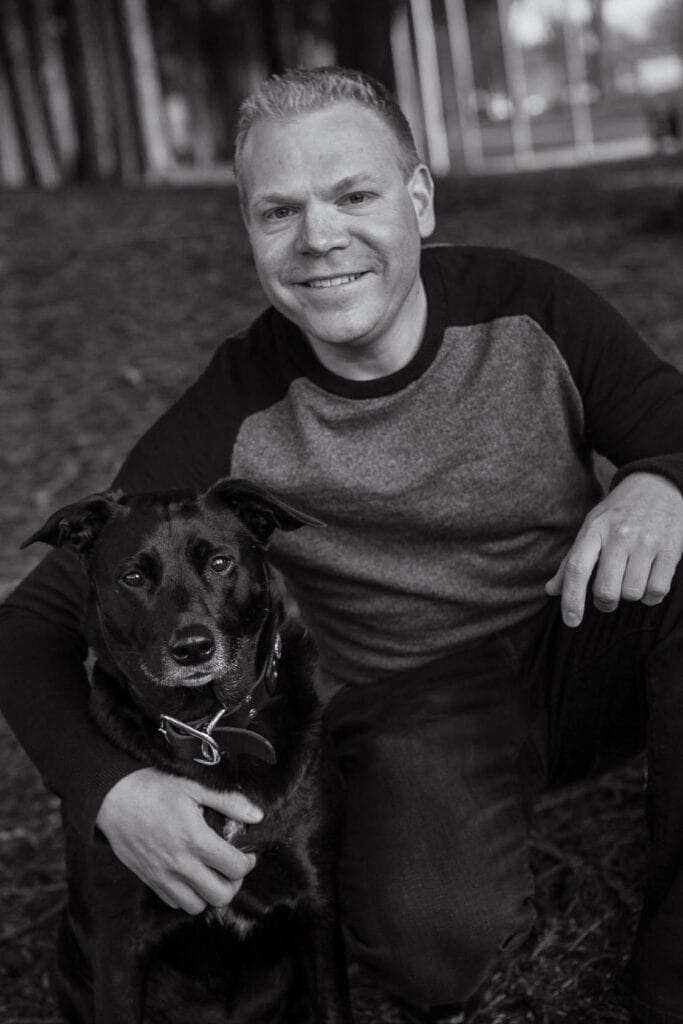
Amit Freeman
Owner and pilot in command12 years flying
- FAA Part 107 certified
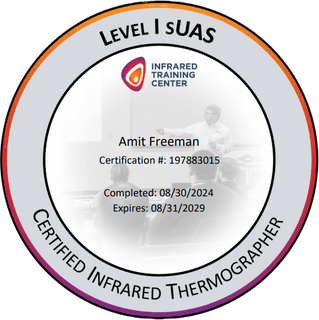
- ITC Level 1 Aerial Thermographer
- Texas Parks & Wildlife aerial permit
- BBB accredited
- Member, Lost Pet Search and Rescue Drone Association
Check it before you read any further
The certificate above is a federal one and the register is public. Search the name, confirm it is real, and then decide how much the rest of this page is worth. That is the correct order, and it takes about thirty seconds.
Search the FAA airman registry (opens in a new tab)
Ask for the insurance certificate too and you will have it in one reply. If anybody offering to search for your animal is reluctant to give you either, that reluctance is the answer to the question you were asking.
Every Canine's Halo search is flown by the person who owns the company. The call you make is answered by the pilot, the assessment of whether a search is worth flying is made by the pilot, and the aircraft over your street is being flown by the same person on both ends of that conversation.
The training behind that is specific rather than general: a Part 107 certificate for the flying, and ITC thermography training for reading what the sensor returns — which is the half that is easy to get wrong. A thermal image is not a photograph, and the difference between an animal, a warm rock and a sun-loaded fence post at three hundred feet is a learned skill with a right answer.
The flight record, and who keeps it
These figures come from AirData, which reads them out of the flight logs the aircraft upload after every flight. They are not typed in by us and they are not ours to adjust. The badge links to the certificate at AirData, where the same numbers are shown by somebody with no stake in whether you call.
- Flights logged
- 1,527
- Hours in the air
- 535
- Miles flown
- 3,854
Every one of those hours was flown looking for a missing animal. None of it is roof survey, solar array, utility inspection or mapping work — the daytime thermal jobs that make up most of the logged time behind a comparable number. That distinction is the one this site asks you to put to anybody you are considering: hours flown on thermal at night, not hours flown on thermal. This is the whole of the log rather than the search-shaped slice of it.
(opens the certificate in a new tab)
Being precise about who is vouching for what. AirData certifies the count — the hours, the flights, the distance, and that maintenance and wind limits are being tracked — because it reads them out of the aircraft's own logs. That all of it was animal searching is our statement rather than theirs, and it follows from this being the only work the company does. None of it is a success rate, and nobody should read it as one. What the record rules out is the operator who bought a drone last month and a stock photograph to go with it.
One pilot, and what that means both ways
The honest cost first: one pilot cannot be in two places at once. On a night when two animals go missing in different counties, the second call gets a straight answer about when a search can actually be flown rather than a booking that quietly slips.
What you get in exchange is that nothing is handed off. Nobody arrives who has not spoken to you, the person deciding whether the conditions are worth flying is the person who has to fly them, and there is no incentive anywhere in the arrangement to dispatch a search that should not be flown — which is the failure mode when the people booking the work and the people doing it are different people.
It also means the schedule is not built around another job. A search is flown in the window that gives your animal the best chance rather than the window that happened to be free, and that is the whole of the argument against hiring on availability alone.
Why this is the only thing we do
Thermal drone work is a general capability. It gets used for roof surveys, for infrastructure inspection, for agriculture, and searching for a missing animal is often a sideline on top of one of those. There is nothing wrong with that, and it is not what happens here.
Every decision — which aircraft, which sensor, which hour to fly, which traps and cameras to carry — has been made for one job. That focus is also why we will tell you when a search is unlikely to be worth your money before you spend it. An operator with an aircraft sitting idle has a reason to fly anyway; the reputation of a business that only does this is worth more than a single search fee.
If that checks out, tell us what happened
Send the details and you will get a straight read on whether a thermal search fits your case, including when it does not. Nothing is booked and nothing is charged at that stage.