
What makes an aerial search work
Most drones cannot do this work, and the reason is not the flying. It is that finding an animal from the air is two separate jobs — noticing something, then working out what it is — and they need different instruments.
The three photographs below are the same dog, in the same field, at the same moment. They are the clearest way to explain what an aerial search actually needs.
Thermal finds it
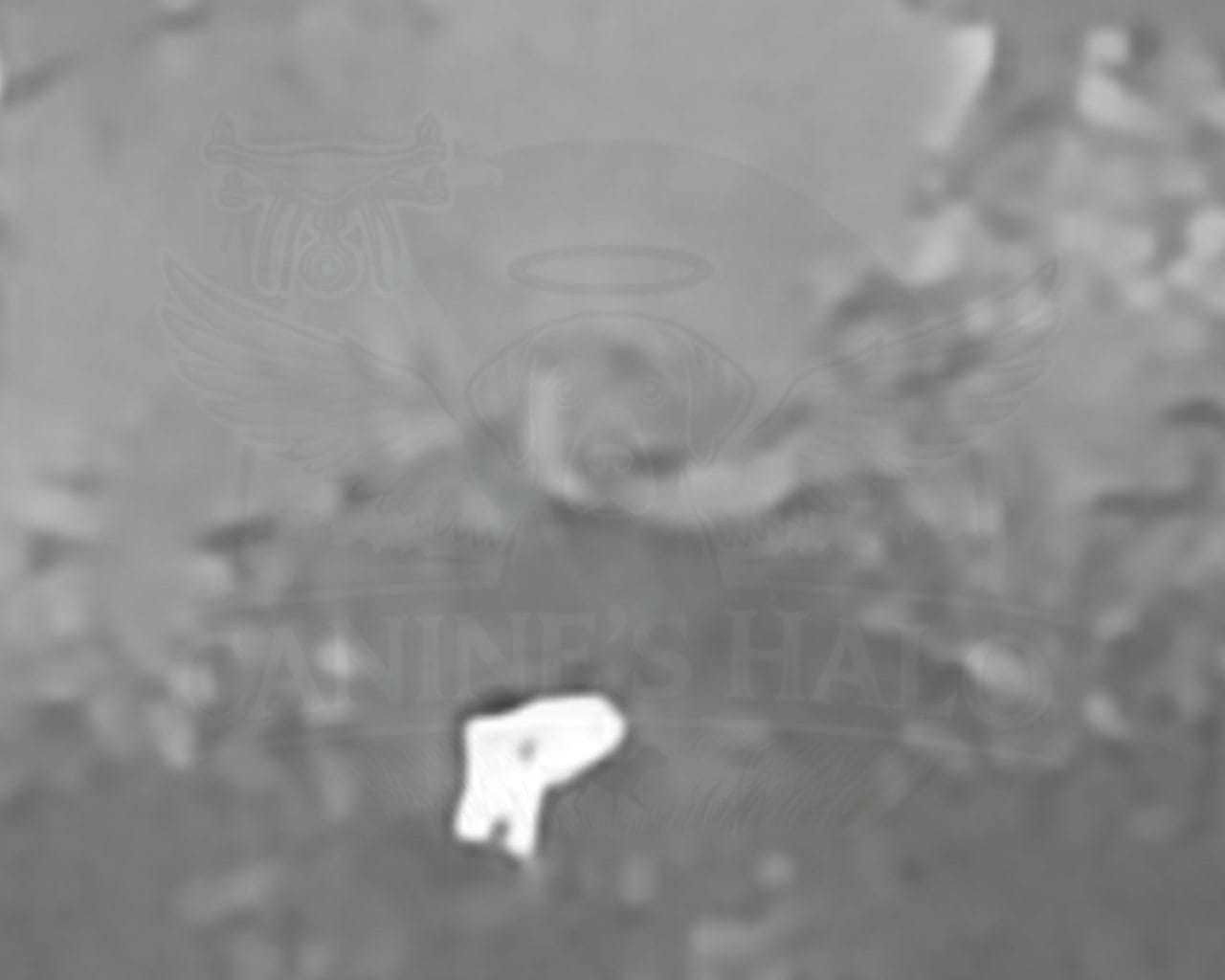
A thermal camera does not use light at all. It reads the radiation an object emits, so darkness makes no difference to it, and fog and light vegetation interfere far less than they do with an ordinary camera.
That matters because animals are very good at not being seen. Color and pattern evolved to break up an outline against a background, and from two hundred feet a tan dog on dry soil is close to invisible in the visible spectrum. None of that camouflage does anything about body heat. A warm-blooded animal against cooler ground is not a subtle signal — it is the brightest thing in the frame.
What thermal cannot do is tell you what it has found.
Zoom identifies it
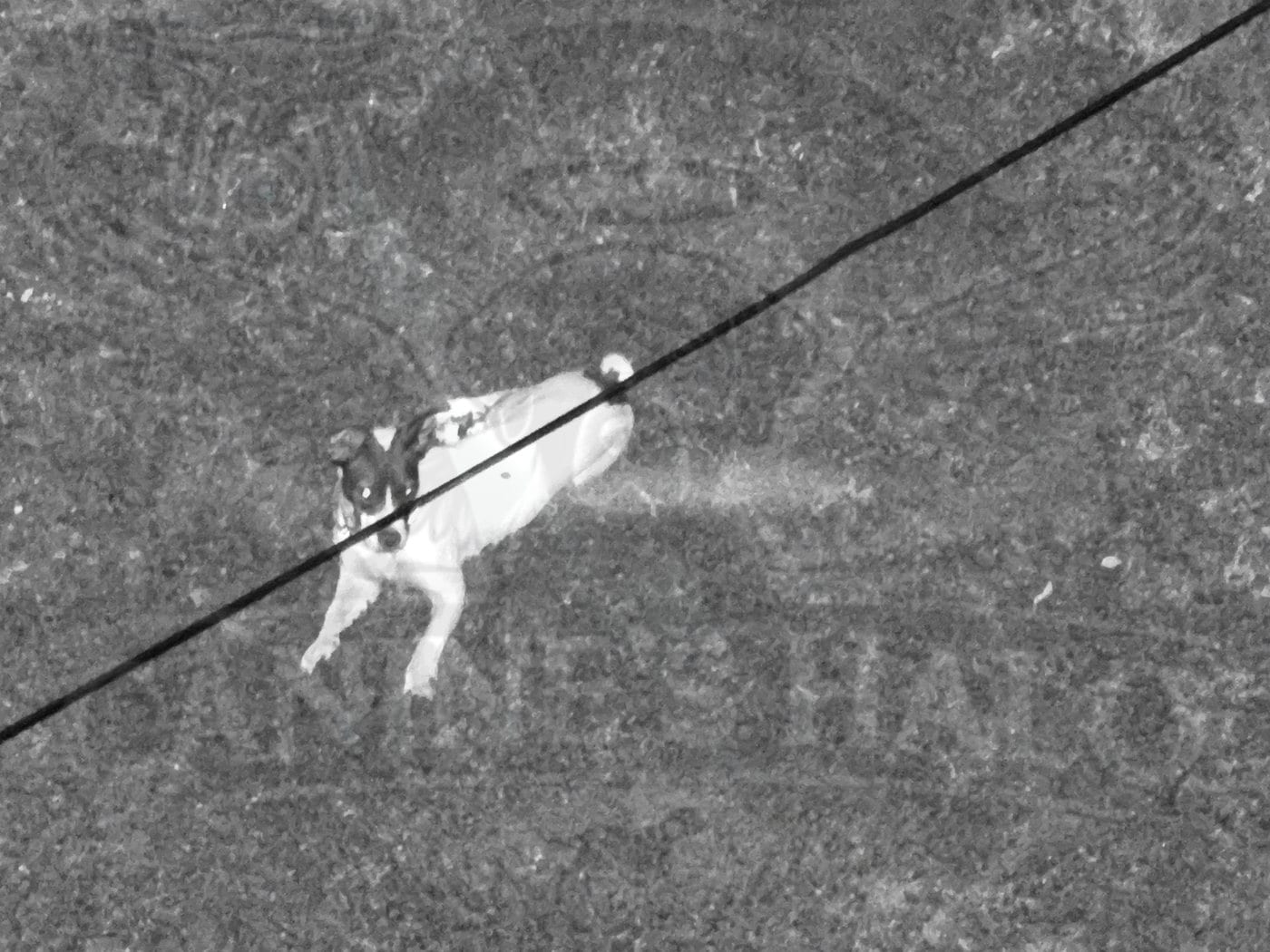
At altitude a heat signature is a warm blob. Is that a coyote or a German Shepherd? A small dog curled up, or a rock in a creek bed that has been sitting in the sun all afternoon? From thermal alone those questions frequently cannot be answered, and guessing wrong in either direction is expensive: a false positive sends people to the wrong place, and a false negative means the search passed directly over the animal it was looking for.
So every signature worth anything gets confirmed on the optical camera. That needs real optical zoom — the kind that resolves an animal from a couple of hundred feet up. Consumer drones do not have it. Your neighbor's DJI Mini has a perfectly good camera for landscapes and no ability whatsoever to resolve a dog-sized object from search altitude, which is why a consumer drone with no thermal is close to no search at all.
Light is what makes the zoom possible
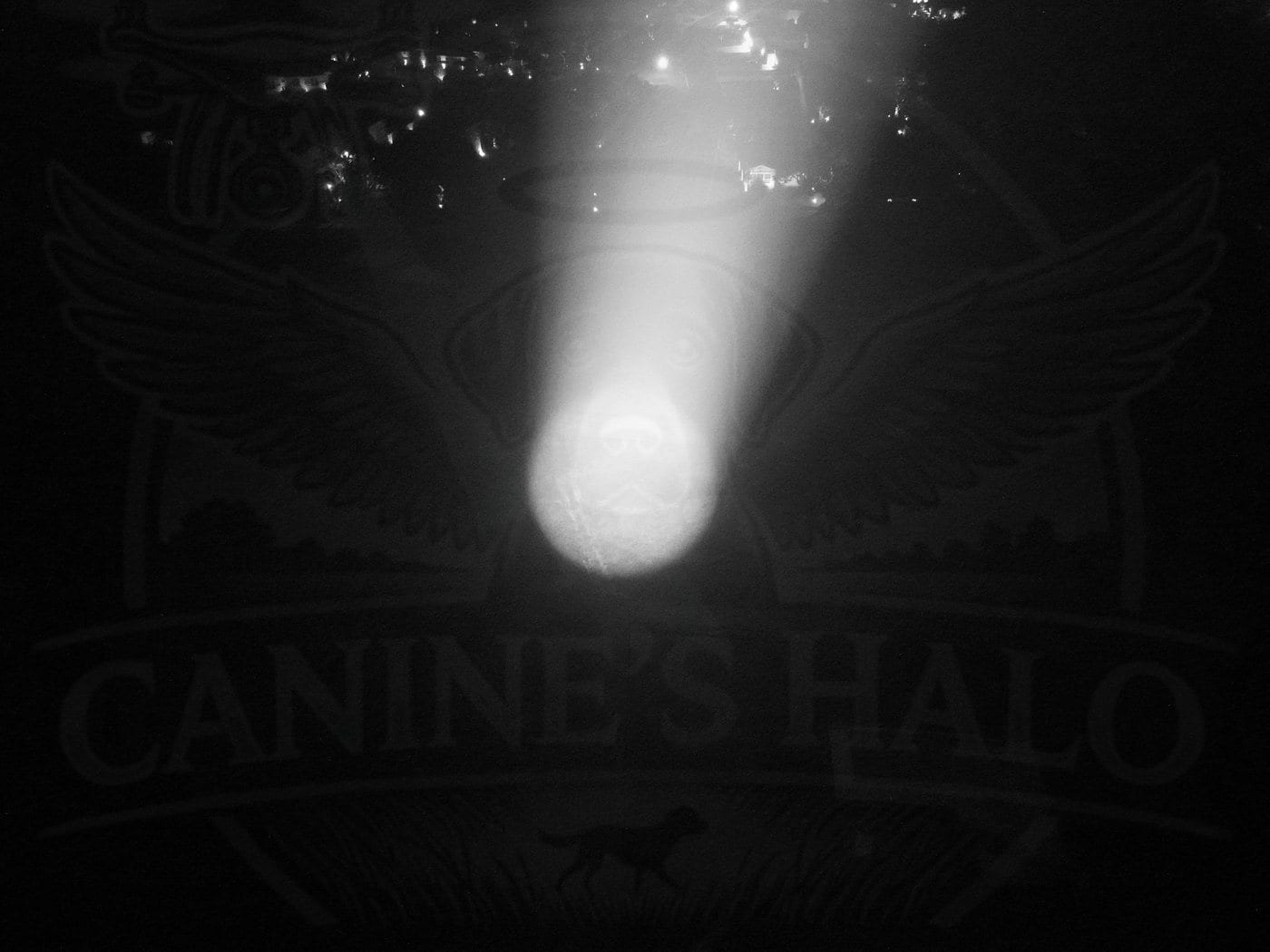
Here is the part that surprises people. Thermal works in the dark, so searches are flown at night — but the optical camera doing the identifying is an ordinary camera, and an ordinary camera needs light reflecting off the subject. At two in the morning there is none.
A powerful spotlight is therefore not an accessory. Without it, thermal finds heat signatures all night that nobody can identify, and a search returns a list of maybes.
And the hour decides more than the hardware
Thermal reads the difference between an animal and its background, so the question is not how hot the animal is but how cold the ground is. In Texas the ground spends all day absorbing solar energy and gives it back slowly, which is why the middle of the day is hopeless: sun-loaded rock, road and brush read hotter than the animal you are looking for.
The ground is coldest, and the contrast best, in the hours before sunrise. That is also when dogs tend to start moving — looking for water, starting their day — and movement helps enormously, because rocks do not walk. It is the best window there is, and its limitation is that it ends: once the sun is up, the ground loads again and the search stops.
A hot day makes the evening a weak window rather than a good one, whatever is convenient to schedule. The full picture, season by season, is on the homepage conditions table, and what we carry — including what none of it can do — is on the equipment page.
If you are weighing up operators, the questions worth asking are whether the aircraft has thermal and real optical zoom and a light, and what hours they can actually fly. Any one of those missing changes what a search is worth.
If you want a straight read on your case
Send the details and you will get an honest answer on whether a thermal search fits it, including when it does not. Nothing is booked and nothing is charged at that stage.